
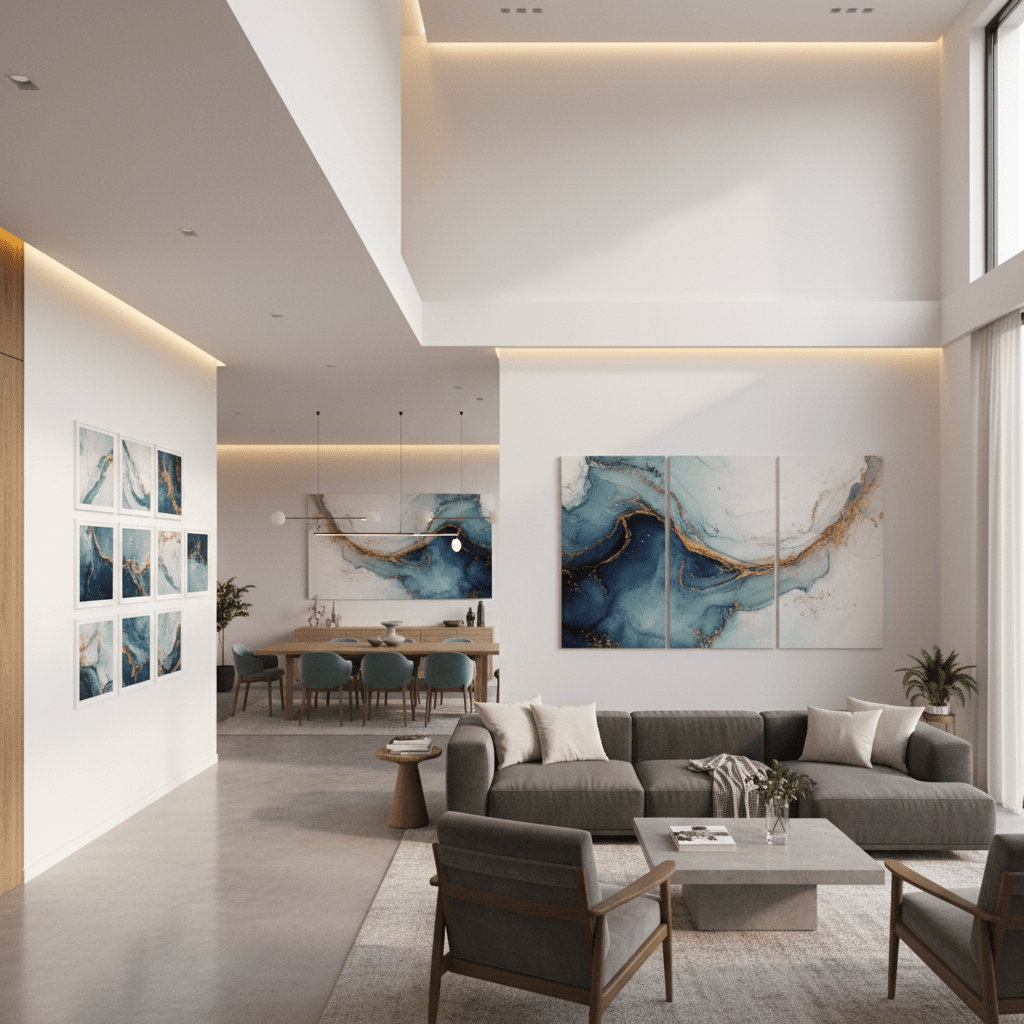
Creating a unified visual experience throughout your home requires more than just hanging beautiful canvas prints on your walls. A cohesive multi-room gallery design transforms disconnected spaces into a harmonious living environment that tells a complete story. Whether you’re decorating a new home or refreshing your current space, understanding how to coordinate canvas prints across multiple rooms will elevate your interior design to a professional level.Modern multi-room gallery design
Understanding Visual Flow in Your Home
Visual flow refers to how your eye moves from one space to another, creating a sense of continuity and connection. When you create a cohesive multi-room gallery design, you’re essentially building a visual pathway that guides visitors through your home while maintaining a consistent aesthetic. This doesn’t mean every room should look identical, but rather that each space should feel like part of a larger, intentional design narrative.
The key to achieving visual flow lies in identifying common elements that can thread through different rooms. These elements might include color palettes, artistic styles, subject matter, or framing choices. By repeating certain design elements while allowing for room-specific variations, you create both unity and interest throughout your home.
Establishing Your Core Design Theme
Before selecting canvas prints for multiple rooms, establish a core design theme that will serve as your foundation. This theme should reflect your personal style while considering the architectural features and natural lighting in your home. Your core theme might be modern minimalism, rustic warmth, coastal serenity, or urban sophistication.
Once you’ve identified your theme, create a mood board that includes color swatches, texture samples, and inspirational images. This visual reference will guide your canvas print selections and ensure consistency across rooms. Consider the emotional atmosphere you want to create in your home. Do you want spaces that feel energizing and vibrant, or calm and contemplative? Your canvas print choices should support this overall mood.
Your core theme should be flexible enough to accommodate the different functions of various rooms. A living room might feature bold, conversation-starting pieces, while a bedroom requires more soothing imagery. The thread connecting these spaces should be evident but not restrictive.
Choosing a Unifying Color Palette
Color is the most powerful tool for creating cohesion across multiple rooms. Select a primary color palette of three to five colors that will appear throughout your home in varying proportions. This doesn’t mean every canvas print must contain all these colors, but each piece should incorporate at least one or two colors from your established palette.Coordinated color palette in hallway gallery
Consider using the 60-30-10 rule across your home. Your dominant color should appear in about 60% of your spaces, your secondary color in 30%, and your accent color in 10%. This proportion creates balance while preventing monotony. For canvas prints specifically, you might choose pieces where your dominant color appears as a background or major element, while accent colors provide visual interest.
Neutral colors like white, gray, beige, and black serve as excellent foundation colors that allow you to introduce bolder accent colors through your canvas prints. If your walls are neutral, you have more flexibility to choose vibrant or dramatic canvas prints. Conversely, if you have colored walls, select canvas prints that complement rather than compete with your wall colors.
Don’t forget to consider the undertones in your colors. Warm undertones (yellow, orange, red bases) should be paired with other warm tones, while cool undertones (blue, green, purple bases) work best with other cool tones. Mixing warm and cool undertones can create visual discord that disrupts your cohesive design.
Selecting Complementary Artistic Styles
While your canvas prints don’t need to be identical across rooms, they should share stylistic similarities that create visual harmony. If you start with abstract expressionist pieces in your living room, transitioning to photorealistic landscapes in your bedroom might feel jarring. Instead, consider how different artistic styles can complement each other while maintaining consistency.
One effective approach is to vary the subject matter while keeping the artistic style consistent. For example, you might choose contemporary abstract pieces throughout your home, but vary the color intensity and composition based on each room’s purpose. Alternatively, you could maintain a consistent subject matter like nature photography while varying the specific scenes from room to room.
Consider the level of visual complexity in your chosen style. Highly detailed, busy artwork creates a different energy than minimalist, simple compositions. Mixing these extremes across connected spaces can feel disjointed. Instead, aim for a similar level of visual complexity throughout your home, adjusting only the scale and color intensity based on room function.
Creating Room-Specific Variations Within Your Theme
While maintaining overall cohesion, each room should have its own personality that reflects its function and the activities that take place there. Your living room canvas prints might be larger and more dramatic, serving as focal points for conversation and entertainment. Dining room pieces could incorporate food-related imagery or warm colors that stimulate appetite and conversation.Bedroom gallery coordinated with living spaces
Bedrooms benefit from calming imagery and softer colors that promote relaxation and sleep. Consider canvas prints featuring serene landscapes, gentle abstracts, or personal photographs with emotional significance. Home offices require artwork that inspires focus and productivity without being distracting. Geometric patterns, motivational landscapes, or subtle abstracts work well in these spaces.
Hallways and transitional spaces offer opportunities to create visual bridges between rooms. These areas are perfect for series or collections that hint at the themes in adjacent rooms. A hallway connecting a blue-themed living room to a green-themed bedroom might feature canvas prints that incorporate both colors, creating a smooth transition.
Coordinating Frame Styles and Finishes
Frame selection significantly impacts the cohesion of your multi-room gallery design. Consistent framing creates immediate visual unity, even when canvas print subjects vary considerably. You don’t need identical frames throughout your home, but you should establish framing guidelines that create harmony.
Consider choosing one primary frame style for your main living areas and a complementary style for private spaces. For example, you might use sleek black floating frames in public spaces like living rooms and dining rooms, then transition to natural wood frames in bedrooms and personal spaces. This creates distinction while maintaining a relationship between the spaces.
Frame finish is equally important. Matte black frames create a modern, gallery-like atmosphere, while warm wood tones add traditional elegance. Metallic finishes in gold, silver, or bronze introduce glamour and sophistication. Whatever finish you choose, use it consistently within connected sight lines. If you can see from your living room into your dining room, these spaces should feature the same or closely related frame finishes.
For a truly cohesive look, consider frameless gallery-wrapped canvas prints throughout your home. This approach eliminates the frame variable entirely, allowing the artwork itself to create unity through color and style alone. Gallery-wrapped canvases also create a contemporary, clean aesthetic that works well in modern homes.
Balancing Scale and Proportion Across Rooms
The size of your canvas prints should be proportional to the rooms they occupy while maintaining a sense of scale consistency throughout your home. A massive statement piece in a small powder room will feel overwhelming, while tiny prints in a spacious living room will seem insignificant.
Establish a scale hierarchy based on room importance and size. Your primary living spaces can accommodate larger pieces, typically ranging from 30×40 inches to 40×60 inches or even larger for statement walls. Secondary spaces like bedrooms work well with medium-sized pieces from 20×30 inches to 30×40 inches. Smaller spaces like bathrooms and hallways are perfect for pieces in the 16×20 inch to 20×24 inch range.
When creating gallery walls across multiple rooms, maintain consistent spacing between pieces. Standard spacing ranges from 2 to 4 inches between frames. Using the same spacing throughout your home creates subliminal visual consistency that contributes to overall cohesion.
Consider the relationship between canvas print size and furniture scale. In rooms with large, substantial furniture, your canvas prints should be proportionally sized to hold their own visually. In rooms with more delicate or minimal furniture, smaller or medium-sized prints maintain better balance.
Implementing Strategic Repetition
Repetition is a fundamental design principle that creates rhythm and unity in multi-room gallery designs. This doesn’t mean duplicating the same canvas print in multiple rooms, but rather repeating specific elements that create visual echoes throughout your home.
You might repeat a specific color across different rooms in varying intensities. A deep navy that appears as the dominant color in a living room abstract might reappear as an accent color in a bedroom landscape. This color repetition creates subconscious connections between spaces.
Repeating shapes or patterns also creates cohesion. If you feature circular or organic shapes in your living room canvas prints, incorporating similar shapes in other rooms reinforces your design theme. Geometric patterns can be repeated with variations in scale or color to create both unity and interest.
Consider creating intentional series or collections that span multiple rooms. A triptych might have its three panels distributed across connected spaces, creating a literal visual thread. Alternatively, a series of botanical prints might progress from bold, colorful flowers in social spaces to subtle, monochromatic plants in private areas.
Considering Lighting Consistency
Lighting dramatically affects how canvas prints appear and how they contribute to overall cohesion. Natural light, warm incandescent light, and cool LED light all render colors differently. For true cohesion, consider how lighting conditions vary across your rooms and select canvas prints accordingly.
Rooms with abundant natural light can handle darker, more saturated canvas prints without feeling heavy. North-facing rooms with cooler natural light benefit from warm-toned artwork that adds visual warmth. South-facing rooms with warm, bright light can accommodate cooler tones that balance the natural warmth.
In rooms relying primarily on artificial light, consider the color temperature of your bulbs. Warm white bulbs (2700-3000K) enhance warm colors in canvas prints but can muddy cool colors. Daylight bulbs (5000-6500K) render colors more accurately but can feel harsh in intimate spaces. For the most cohesive appearance, use similar color temperature bulbs throughout your home.
Adding picture lights or track lighting to highlight specific canvas prints creates focal points while ensuring color accuracy. If you illuminate artwork in one room, consider doing so in other rooms as well to maintain consistency in how your gallery is presented.
Planning Sight Lines and Visual Connections
When designing a multi-room gallery, consider what you see from various vantage points throughout your home. Stand in doorways and high-traffic areas to identify key sight lines where multiple canvas prints are visible simultaneously. These moments of visual overlap are critical opportunities to reinforce cohesion.
Ensure that canvas prints visible in the same sight line share clear connections through color, style, or subject matter. If you can see your living room and dining room simultaneously from your entryway, the canvas prints in both spaces should feel related. This might mean they share a dominant color, similar artistic style, or complementary subject matter.
Create intentional visual journeys through your home by positioning canvas prints that draw the eye from one space to another. A bold piece at the end of a hallway pulls visitors forward, while a series of smaller pieces along the hallway walls creates a progressive experience.
Consider how canvas prints appear in reflections and through doorways. A mirror in your dining room might reflect canvas prints in your living room, creating an opportunity for intentional coordination. Open floor plans require particular attention to sight lines since multiple spaces are visible simultaneously.
Incorporating Personal Photography Cohesively
Personal photographs add emotional depth and individuality to your multi-room gallery design. To incorporate family photos cohesively, treat them with the same design consideration as any other canvas prints in your home.
Convert personal photographs to a consistent style before printing on canvas. You might choose black and white photography throughout your home for a classic, unified look. Alternatively, apply consistent color grading or filters to your photos so they share a similar tonal quality. This professional approach elevates personal photos to art pieces that integrate seamlessly with your overall design.
Consider the subject matter of your personal photographs in relation to room function. Family portraits and celebration photos work beautifully in social spaces like living rooms and dining rooms. More intimate personal moments might be better suited to bedrooms and private spaces. Landscape or travel photography from your personal collection can work anywhere, especially when edited to match your color palette.
Create photo series or collections that span multiple rooms. A travel series might progress chronologically through different spaces, or a family timeline might begin in public spaces with historical photos and progress to current images in private areas.
Maintaining Flexibility for Evolution
A cohesive multi-room gallery design should have built-in flexibility to evolve over time. Your tastes will change, your family will grow, and your home will transform. Design your gallery system to accommodate these changes without requiring complete redesign.
Choose a core color palette and framing style that you genuinely love and that has staying power. Trendy colors and styles may feel dated quickly, requiring expensive updates. Classic color combinations and timeless framing choices provide a foundation that remains relevant for years.
Consider creating a rotation system where you swap canvas prints seasonally or annually. This approach allows you to refresh your spaces without abandoning your cohesive design. Store alternate pieces that fit within your established theme and swap them when you desire change.
Leave some wall space intentionally empty to accommodate future additions. As you travel, experience new things, or commission custom pieces, you’ll want space to incorporate these new elements without overcrowding your walls.
Professional Installation for Cohesive Results
Even the most carefully selected canvas prints can fail to create cohesion if they’re poorly installed. Professional installation ensures that your multi-room gallery design achieves its full potential through proper placement, leveling, and spacing.
Establish consistent hanging heights throughout your home. The standard gallery height places the center of artwork at 57-60 inches from the floor, which is average eye level. Maintaining this height across rooms creates subliminal consistency. In rooms with different ceiling heights, you may need to adjust slightly, but try to keep the bottom edges of similarly sized pieces at consistent heights.
Use proper hardware for your wall type and canvas print weight. Nothing disrupts a cohesive design like crooked or falling artwork. Professional installers have the tools and expertise to ensure secure, level installation regardless of your wall material.
For gallery walls spanning multiple rooms, consider hiring a designer to create templates and installation plans. This investment ensures proper spacing, alignment, and visual balance that’s difficult to achieve through trial and error.
Bringing It All Together
Creating a cohesive multi-room gallery design with canvas prints transforms your house into a thoughtfully curated home that reflects your personality and style. By establishing a core theme, selecting a unifying color palette, coordinating artistic styles, and paying attention to details like framing and lighting, you create visual harmony that makes your entire home feel intentional and complete.
Remember that cohesion doesn’t mean uniformity. Each room should have its own character while contributing to the overall design narrative of your home. The goal is to create spaces that feel distinctly different yet undeniably related, like chapters in a compelling book.
At Canvas Prints Calgary, we understand the complexity of designing multi-room galleries that achieve this perfect balance. Our design consultants can help you select canvas prints that work together across your entire home, considering your unique space, style preferences, and lifestyle needs. Whether you’re starting from scratch or refining an existing collection, we’re here to help you create a cohesive gallery design that you’ll love for years to come.
Meta Description: Learn how to create a cohesive multi-room gallery design with canvas prints. Expert tips on color coordination, artistic style selection, and visual flow for a harmonious home.
Target Keywords: multi-room gallery design, cohesive canvas prints, coordinated home decor, canvas print design, gallery wall planning (1-2% density)