Most Calgary customers compare canvas prints by size, price, and how the product looks in a website photo. Material often gets less attention, even though it has a major effect on the final print. A canvas can be the right size and still feel disappointing if the fabric is thin, synthetic, or poorly finished.
The difference between cotton canvas and polyester canvas is not only a technical detail. It affects texture, colour depth, ink behaviour, durability, and the way the finished piece feels in a real room. If the image is a family portrait, mountain trip, wedding photo, pet image, or restored family picture, the material matters.
This Calgary guide explains the practical difference between cotton and polyester canvas so buyers can make a better decision before ordering.
In this guide
- Local Material Advice
- Real-World Examples
- Why Canvas Material Changes The Final Print
- What Cotton Canvas Is
- What Polyester Canvas Is
- Colour, Ink, And Texture
- Durability And Finishing
- Why Cheap Canvas Prints Often Use Synthetic Materials
- How To Check Before Ordering
- Which Material Should You Choose?
- More Local Buying Guidance
- Room And Use Case Examples
- Material Checklist Before You Order
- Final Material Decision
- Why Material Affects Value
- Where To Go Next
- Common Questions
Local Material Advice
Calgary buyers often print images with rich natural detail: mountain lakes, snow, prairie skies, family portraits, pets, and wedding images. Those photos need colour depth and texture. A flat synthetic surface can make a meaningful image feel more like a poster than artwork.
Homes in Calgary also deal with strong seasonal light. A canvas may hang in bright summer rooms and dim winter evenings. Better material and finishing help the image keep depth in both conditions.
For large living room prints, cotton canvas can make scenic images feel more substantial. For smaller family portraits, it helps faces and skin tones feel warmer and less plastic-like.
The local question is simple: if the photo is important enough to put on the wall, it is worth asking what fabric it will be printed on.
Real-World Examples
A Banff lake photo can look bright online, but on thin polyester it may feel flat once enlarged. A textured cotton surface gives the same image more presence.
A family portrait with soft skin tones usually benefits from cotton canvas because the print feels less slick and more natural.
A restored old photo should not look like a disposable poster. Cotton canvas gives heritage images a more respectful fine-art feel.
Why Canvas Material Changes The Final Print
Canvas material affects how ink sits on the surface, how colours appear, how much texture the viewer sees, and how the finished print feels as an object. Two prints can use the same image and still look different because the fabric behaves differently.
A premium canvas print should not feel like a thin poster with texture printed on top. It should have real fabric character, a stable stretch, and enough surface depth to make the image feel like artwork.
Material also affects customer expectations. When people order canvas, they usually imagine the character of artist canvas. If the surface feels plastic-like, the emotional reaction is different, even if the image is technically printed.
What Cotton Canvas Is
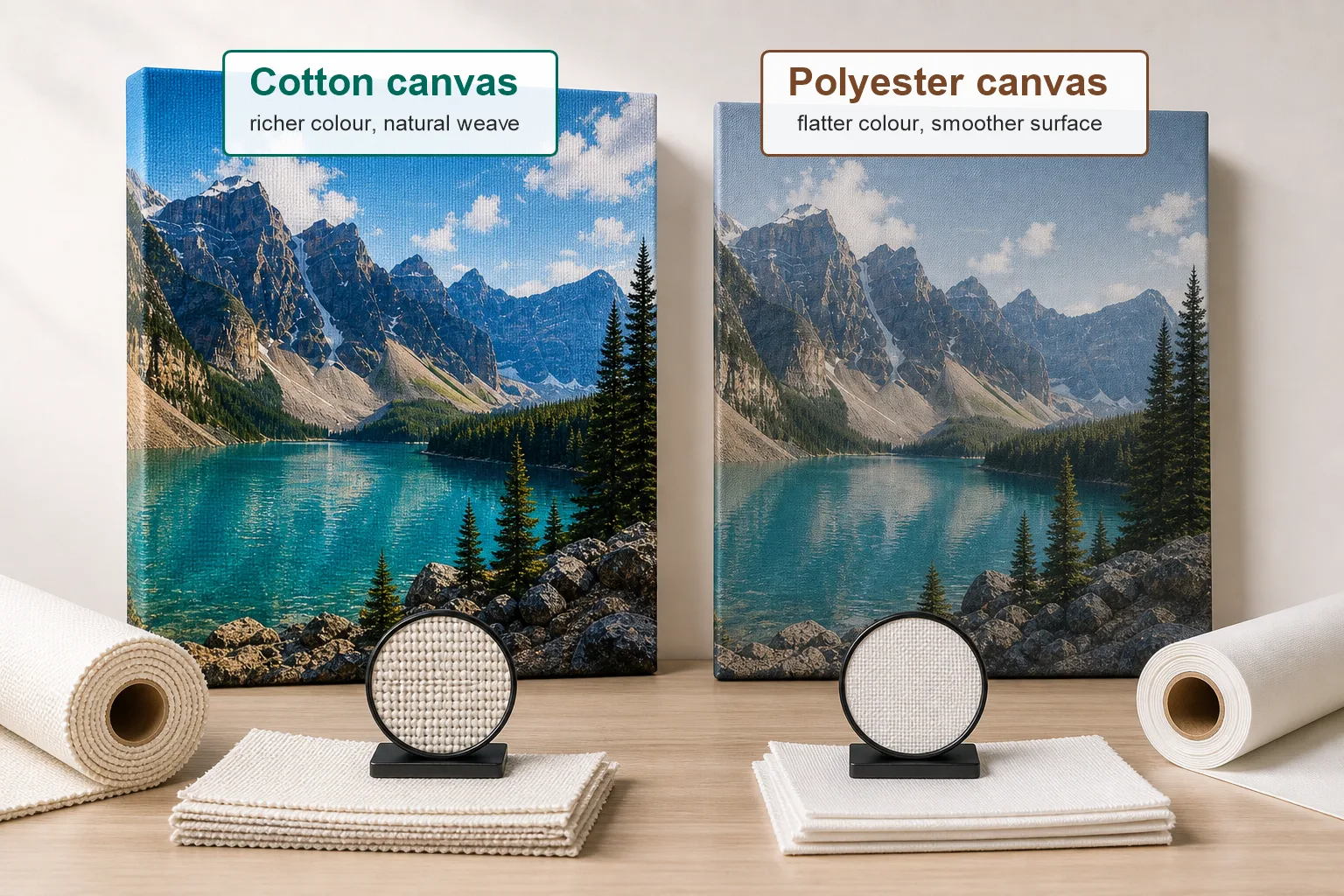
Cotton canvas is a natural woven fabric used in art and fine-art printing. It has a tactile texture and a surface that helps printed images feel warmer and more substantial.
Because cotton has natural fibre character, it can give portraits, landscapes, restored photos, and artwork a richer physical presence. It does not look as slick as synthetic material, which is part of its appeal.
Cotton canvas is often chosen for premium photo canvas prints because the goal is not only sharpness. The goal is a finished piece that feels at home on a wall for years.
What Polyester Canvas Is
Polyester canvas is synthetic. It is often less expensive to produce, easier to use at high volume, and common in budget canvas printing. It can hold printed images, but the surface tends to feel different from traditional artist canvas.
Some polyester prints can look sharp at first glance, especially in small online previews. The issue is usually the finished feel: less natural texture, a flatter surface, and sometimes a more plastic-like impression.
Polyester is not automatically unusable. It may be fine for temporary decor or low-cost projects. The concern is when it is marketed with premium language while customers believe they are receiving a fine-art style canvas.
Colour, Ink, And Texture
Cotton canvas can help colour feel deeper because the surface has real woven texture. The ink interacts with that texture in a way that supports portraits, scenic images, and artwork.
Polyester can sometimes produce a crisp surface, but crisp is not the same as premium. If the material lacks character, the final print can look less dimensional, especially in large sizes.
The best result depends on the image too. Skin tones, water, sky, forest detail, old photos, and wedding portraits all benefit from a surface that feels natural rather than slick.
Durability And Finishing
Material is only one part of durability. The print also needs good inks, proper stretching, stable stretcher bars, and a protective finish. A premium canvas should be sealed after printing to help protect against UV exposure, moisture, and surface scratches.
A cheap canvas may look acceptable on day one and still age poorly. Weak material, poor stretching, and skipped coatings can show up later as fading, looseness, scuffs, or a print that never quite feels substantial.
If the canvas is a family photo, gift, memorial image, or artwork for a main room, durability should matter. The print is not just a transaction; it becomes part of the home.
Why Cheap Canvas Prints Often Use Synthetic Materials
Low advertised prices usually come from somewhere. A company can reduce costs by using thinner material, synthetic canvas, lighter frames, less finishing, faster production, or distant manufacturing.
That does not mean every budget order fails. It means buyers should understand the tradeoff. If a large canvas is priced far below the market, something in the material, labour, finishing, or support process may have been reduced.
The problem is not low price by itself. The problem is low price combined with vague premium claims. If a company says premium or museum quality, it should clearly explain what the canvas is made from.
How To Check Before Ordering
Look for a clear material description. If the company does not say cotton, polyester, or poly-cotton blend, ask. Vague words like premium and gallery quality are not enough.
Check whether the canvas is sealed after printing. A professional company should be able to explain the finishing process clearly.
Read the lowest-rated reviews, not only the five-star reviews. Complaints about dull colour, thin material, loose stretching, plastic feel, and poor support often reveal what the marketing page does not.
Ask where the canvas is produced. Local or Canadian production can make communication, quality control, and problem solving easier.
Which Material Should You Choose?
Choose cotton canvas when the image is meaningful, the print will hang in a main space, or you want the piece to feel like artwork. Family portraits, weddings, pets, scenic photos, restored images, and custom artwork usually deserve that upgrade.
Polyester may be acceptable for temporary decor, low-budget projects, or images where price is more important than long-term feel. It is not the best fit when the print carries emotional value.
The simplest test is this: if you would be disappointed for the canvas to feel thin or synthetic when it arrives, choose a printer that clearly uses premium cotton canvas and explains its finishing process.
More Local Buying Guidance
For Calgary landscape prints, material is especially visible in large blue skies, snow fields, and turquoise lakes. A synthetic surface can make those smooth areas look flat. Cotton texture gives the print something physical to hold onto, which helps large scenic images feel less like a poster.
For portraits, the difference is usually felt in skin tone and softness. A cotton canvas surface can make a family photo feel warmer and more natural, while a slick synthetic finish may make the same image feel more commercial.
For gifts, the material choice sends a message. A small price saving may not matter if the gift feels cheap when it is opened. A wedding photo, pet portrait, or restored family image should feel like it was made with care.
For Calgary offices, cotton canvas can also help branded or local imagery feel more established. A reception print should not look like temporary decor. It should give visitors confidence that details matter.
If the canvas will hang in a bright room, ask about protective coating as well as material. Cotton canvas with archival inks and a proper finish is a different product from a thin synthetic print with no clear finishing process.
The best buyer habit is to read past the headline claims. Words like premium and gallery wrapped are common. The real signal is whether the company clearly names the material, explains the coating, and shows confidence in its production method.
Room And Use Case Examples
Living room canvases need the strongest material choice because they are often the largest prints in the home. If a Calgary customer orders a mountain scene, wedding image, or family portrait for the main wall, cotton canvas helps the print feel intentional at that scale.
Hallway and staircase canvases are viewed close up, so texture becomes even more noticeable. A synthetic surface that might pass from across a room can feel less convincing when someone walks right beside it.
Bedroom prints should feel calm and warm. Cotton canvas works well for softer family moments, restored images, and scenic artwork because the surface does not fight the room.
Office canvases should look professional. If the image represents a brand, product, team, or local scene, cheaper material can weaken the impression before the viewer even thinks about the photo.
For gallery walls, consistency matters. Using cotton canvas across the collection keeps the wall unified as more pieces are added over time.
For gifts, think about the unboxing moment. The recipient will see and touch the canvas before it goes on the wall. A premium surface makes the gift feel more considered.
Material Checklist Before You Order
Confirm whether the canvas is cotton, polyester, or a blend before ordering.
Check whether the print is made with pigment or archival-style inks rather than vague ink claims.
Ask whether the canvas is sealed after printing for UV, moisture, and scratch resistance.
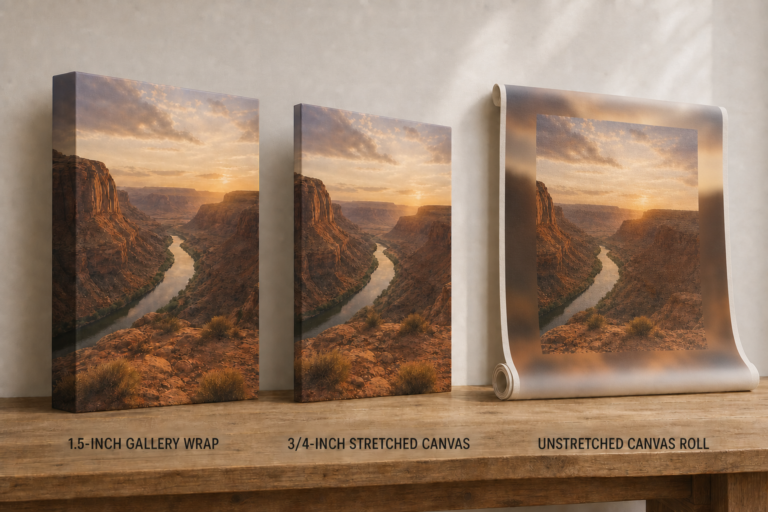
Look for information about stretcher bars, hand stretching, and frame depth.
Read low-rated reviews for comments about dull colour, plastic feel, thin material, loose canvas, or damaged delivery.
Compare the material description with the price. Very low prices often mean compromises somewhere.
Choose material based on the image value. A family heirloom deserves a different standard than temporary decor.
Calgary buyers should also consider support. If the finished piece is important, it helps to know who made it and who will help if something goes wrong.
Final Material Decision
Before choosing material, ask how important the photo is. A quick decorative piece for a temporary wall can tolerate compromise. A family portrait, wedding photo, pet image, or mountain memory for a main wall should be treated differently.
Ask how large the canvas will be. The larger the print, the more obvious the material becomes. Cotton canvas gives large scenic and portrait prints a more believable artwork surface.
Ask how long the piece should stay on the wall. If the answer is years, not months, the choice should lean toward better canvas, better inks, better coating, and better stretching.
Why Material Affects Value
Canvas value is not only the checkout price. It is the relationship between the image, the material, the size, the finishing, and how long the print still feels good on the wall. A cheap canvas that disappoints on arrival is not a bargain if it gets replaced quickly.
Better material also protects the emotional value of the image. A wedding photo, family portrait, pet memorial, restored photograph, or travel memory deserves a surface that makes the image feel cared for. That is why Calgary buyers should compare material details before comparing discounts.
The best canvas print is the one that still feels right after the sale is forgotten. Cotton canvas, archival-style printing, careful stretching, and protective coating all help move the product from temporary decor toward lasting wall art.
Where To Go Next
When you are ready to compare options, use the canvas size and pricing guide. To begin a custom order, upload your image. To review the materials and production standards behind the product, visit the canvas print quality page.
Common Questions
Is cotton canvas better than polyester canvas?
For premium photo canvas prints, cotton canvas is usually preferred because it has a more natural texture and fine-art feel. Polyester can be cheaper but often feels more synthetic.
Does polyester canvas always look bad?
No. Polyester can produce acceptable prints for budget or temporary decor. The concern is when buyers expect premium artwork but receive a low-cost synthetic surface.
Why does canvas texture matter?
Texture affects how the image feels in the room. Cotton canvas gives photos and artwork a more tactile, natural surface, while flatter synthetic material can feel less substantial.
Should Calgary buyers ask what material is used?
Yes. Always check whether the canvas is cotton, polyester, or a blend before ordering. If the website does not say clearly, ask.
What matters besides canvas material?
Ink type, protective coating, stretcher bars, hand stretching, packaging, and production location all affect the final canvas print.